


Key Takeaways
- Prevent Festive Debt: Put a firm spending limit in place using only cash to ensure you don’t pay more than you can afford and have to pay more credit card bills after the holidays.
- Track in Real Time: Log all purchases as they happen in a dedicated budgeting app or spreadsheet to ensure you don’t spend more than you have budgeted.
- Account for Hidden Costs: Don’t miss out on any secondary costs associated with this festive season including holiday meals, travel accommodation, decor, postage, etc.
- Implement Saving Buffers: Start saving early in the year in separate club accounts and take advantage of cash rewards to reduce the impact on your monthly income by implementing the Saving Buffers.
- Bypass Retail Traps: Use cash envelope systems, don’t use buy now pay later plans, and turn off one-click ordering.
Intro
This comprehensive guide offers a practical structure for the holiday financial management, without the high-interest credit card. You can help protect your savings by planning ahead, using different spending limits and monitoring saving activity in real time.
Here are some steps you can take strategically for a holiday season that lasts a lifetime, without any stress to your finances.
Why Holidays Blow Budgets
The money goes out of the window during holidays due to the emotional factor that leads to spontaneous spending and other hidden expenses go out of sight. Society places a high value on making the holidays perfect, and financial gurus such as Suze Orman and Jenny Rodriguez claim that it causes people to over-spend on gifts, décor and holiday food.
One of the top reasons consumers join a Debt Consolidation Program or consider Debt Relief is due to holiday overspending, according to a report from National Debt Advisors. Inflation hacks are essential as the price of goods continues to steadily creep up, thus lowering our purchasing power.
If consumers aren’t mindful of the real price of holiday hosting, traveling and making impulse purchases, the typical monthly budget falls short. The mismatch causes many customers to use their credit cards, and this means that they end up paying for the long-term interest on this debt.
Assess Your Financial Situation
| Assessment Step | Core Metric / Verification Resource | Strict Financial Boundary |
|---|---|---|
| Unallocated Cash Flow | Compare net monthly income against mandatory monthly expenses. | Do NOT dip into emergency funds or mortgage reserves. |
| Debt-to-Income (DTI) | Audit existing credit card balances via Fulton Forward or Credit Smart systems. | Stop using active credit lines if carrying a past balance. |
| Alternative Inflows | Isolate clean windfalls like recent tax refunds or spring yard sale profits. | Never utilize a HELOC for short-term holiday spending. |
The financial status cannot be determined without looking at your existing cash flow, debt obligations and your savings. After the holiday season, take a look at your monthly income and monthly expenses and see just how much money is still available for you to spend on unallocated activities.
- Check the balance of your checking and savings accounts.
- Review your credit card statements to see if there are any outstanding balances.
- Check if you are a good candidate for Neighbors Credit Union personal financial products.
- Use free resources from Fulton Forward or Credit Smart to determine debt-to-income ratio.
Don’t dip into your emergency fund or money set aside for your mortgage to afford your holiday. If you don’t have any excess money, then consider other funds like a tax refund that you just got or money that you received from a yard sale that you did this spring. Don’t consider a Home Equity Line of Credit (HELOC) as a short-term financing scheme for temporary holiday spending.
Set a Realistic Holiday Budget
You need to figure a realistic budget for your vacation by determining how much you can spend, based on how much money you have on hand. This total needs to include everything from the holidays and not only holidays gifts, as well.
The Four-Line Holiday Budget
| Budget Pillar | Scope & Allocations | Target Objective |
|---|---|---|
| 🎁 Gifts | Total accumulated funds allocated for family, close friends, and co-workers. | Eliminate impulse buys |
| ✈️ Travel | Flights, fuel, toll fees, lodging, road-trip meals, and pet/house sitting. | Lock early bookings |
| 🍽️ Hosting | Grocery ingredients, protein items, baking supplies, drinks, and party essentials. | Control menu scales |
| 📦 Miscellaneous | Greeting cards, postage, wrapping paper, holiday lights, and emergency gifts. | Absorb hidden fees |
Your 4-line holiday budget splits your holidays into 4 measurable categories:
Daily Spend, the Per-Day Method
The per day method involves dividing the total amount of money you have for the holiday by the number of days you are on holiday. If you have $600 set aside to spend over 6 days vacation, for example, then you may only spend $100 a day. This way you won’t be spending your money in most of the first days of a trip.
The Contingency Line
The contingency line is an allotment of security reserve in your holiday budget. Set aside 15% of your budget on this line for any unforeseen hikes in prices, need for an emergency gift or airline haggling for the prices you forgot to pay for shipping. Assuming that your overall budget is $1,000, the amount of your contingency line should be exactly $150.
Make a Gift List and Assign Spending Limits
To keep you on track, make an inventory of gifts to give and give each person a firm limit on how much to spend. Having a very short list of items to buy during the holiday season focuses your purchasing and helps you avoid impulse buying.
| Recipient Category | Number of People | Spending Limit Per Person | Category Total |
| Immediate Family | 3 | $100 | $300 |
| Extended Family | 4 | $25 | $100 |
| Close Friends | 2 | $20 | $40 |
| Co-workers/Neighbors | 3 | $10 | $30 |
List the recipients of your donation in a spreadsheet or budgeting software. Spending limits mean that the sum of all spending categories won’t surpass the Line Item limit in your main holiday budget.
Consider Expenses Outside of Gifts
Sometimes, people don’t think about the other expenses that accompany the holidays, which is why their budgets don’t always make it. Designing a realistic spending plan for your holiday is essential to make sure you don’t overspend on your trip.
Holiday Meals
There is a lot of money invested in holiday meals. A typical Thanksgiving meal or holiday family party includes the cost of the protein, baking supplies and drinks for the meal.
Don’t be caught off-guard at the checkout counter by the cost of ingredients by making a list of ingredients before you head to the grocery store, knowing how many people are coming to your event, and using local grocery apps to check out prices.
Travel and Accommodation
Travel expenses consist of the cost of airfares, baggage charges, car rentals, petrol, tolls and accommodation. If you’re traveling during the winter break or a spring break trip, check out travel plans in advance to guarantee lower prices. Consider the expenses associated with pet or house sitting when you are away.
Decorations and Parties
Greeting cards, postage, wrapping paper, holiday lights, Christmas trees and party attire are all a part of decorations and parties. These little costs can add up. Before buying new items, inventory your items to keep new decor expenses under control.
Establish a Budget for Each Holiday Category
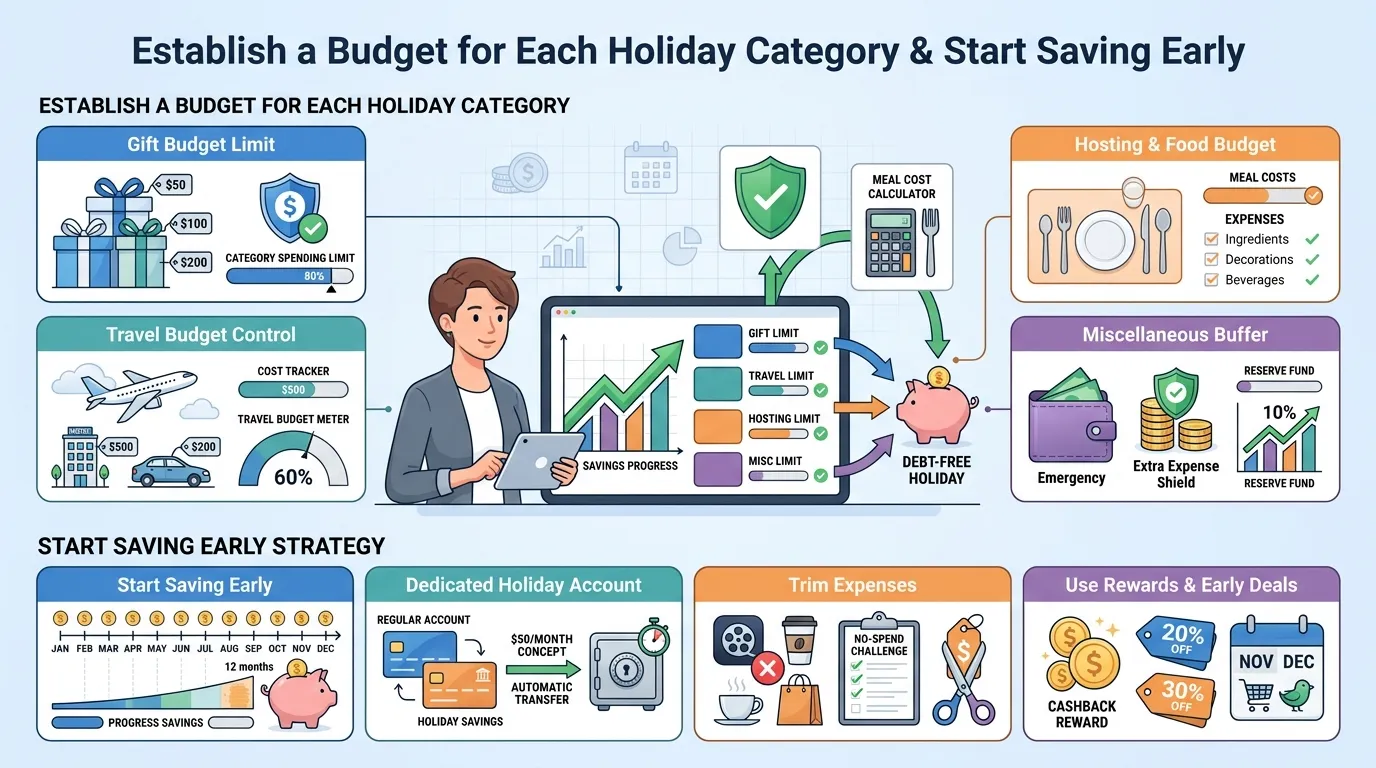
If you want to create a budget that you’re going to stick with for your holiday, set strict limits for each individual category. Don’t deplete resources in one category and end up paying for them elsewhere. You can’t go over budget on your holiday spending and still be able to give away $50 worth of gifts because you will need to cut your gift list or the amount of time you spend hosting by the same amount.
Category limits ensure that you won’t be tempted to use general household funds, and safeguard your core finances. The use of a holiday expense tracker to keep track of each category’s performance relative to the expectations will help.
Start Saving Early
Avoid getting into debt during the holidays by beginning to save towards the holidays early in the calendar year, so you have the money to pay out over several months. Cashing out the nest egg gradually avoids cash flow problems in November and December.
Open a Dedicated Holiday Savings Account
Set up an account for your vacation savings that is separate from your regular checking account, and put it in a different place. There are many banks, including Neighbors Credit Union, that have special holiday club accounts. Automatically transfer $50/month from now until January, which means you will have a $500 cash cushion to use for seasonal purchases by November.
Trim Unnecessary Expenses
Do some trimming of unnecessary costs in the months immediately before the holidays to increase your savings rate. Try a no-spend November challenge by eliminating eating out, subscription fees and splurges. Use that saved money straight towards your vacation.
Use Cash Rewards or Points
Gain credit card rewards, cash rewards and store loyalty all year long. Only save these points to use for November and December shopping. Paying for them with cash can mean you’re able to get gifts or travel tickets without being on the receiving end of your monthly paycheck.
Shop Early and Look for Deals
Be sure to begin the shopping process early so you don’t end up paying a higher price for shipping last minute and the price of the item. If you spread out your purchases over a number of months, you will have a consistent cash flow.
Take Advantage of Sales, But Be Cautious
Shop at big sales, such as Black Friday, Cyber Monday and back-to-school sales. Black Friday price anchoring to check the discount or is the retail price fake. The cooling-off rule is to wait 24 hours before purchasing an unlisted sale item and the impulse buy cooling-off rule applies.
Shop Online
Shop online and compare prices between different retailers and save money as you do it without having to spend money on fuel or fall into dealer traps at the showroom. Find out the price history, active coupon codes and free shipping options with browser extensions.
Purchase Gifts as a Group
Buy gifts together as siblings, friends or co-workers to get quality gifts at a reduced price. When you give half of a meaningful gift, it lowers the price tag on a gift and gives the gift recipient something they’ll want to have.
Track Your Holiday Purchases
| Methodology | Execution Mechanism | Financial Shield Benefit |
|---|---|---|
| Automated App Tagging | Using YNAB or built-in Credit Union tools to instantly attach a “Holiday Spending” tag right at checkout. | Instant category deduction visibility |
| Active Physical Ledgers | Updating a mobile spreadsheet or paper notebook immediately upon leaving a storefront. | Halts omissions from delayed memory |
To keep your holiday spending plan under control, monitor your spending as soon as you make a purchase. If you wait until the end of the week to record expenses, you will be causing omissions in the tracking system.
Use Budgeting Apps or Credit Union Tools
Utilize budgeting applications such as YNAB (You Need A Budget) or other budgeting application alternatives to automatically classify your spending. Many credit unions have in-built functionalities that enable individuals to assign a “Holiday Spending” tag to their transactions and review them on the spot.
Track Spending in Real Time
Check spending in real time by updating a spreadsheet, on a mobile device or a physical ledger, after a store visit. This frequent habit will help you understand exactly what you have left and you can make appropriate adjustments before you get into an over spending problem.
Tips to Save Money During the Holidays
Making smart holiday spending decisions can help you save money and keep the holidays festive.
DIY Gifts
Make a gift from your own talents—Do It Yourself (DIY). Do a GIFTSKILL inventory in a DIY manner, to find what you can make. Some of the inexpensive homemade gift ideas are:
- Baking specialty cookies or loaves of bread.
- Creating scarves or blankets.
- Creating personalised wood products or candles.
- Making homemade spices or spice-infused oils.
Give Experiences Instead of Physical Presents
💡 Value-Based & No-Cost Alternative Registry
Service is a better present than a tangible gift to make memories without the clutter. Buy a museum pass, concert tickets, cooking classes or movie vouchers. These options are related to time, not objects.
Give Non-Traditional Gifts
Consider gifting something other than a traditional gift like your time or a skill. Provide a pot of free babysitting for parents, mow or rake a senior citizen’s lawn, or do laundry and give it a wash. Print out a tangible piece of paper that represents your service and put in the card.
Skip the Latest Features
Avoid paying for the best electronic gadgets with any minor improvements in them when buying. Last year’s smartphone, tablet or games console is a great way to save up to 40% with the very same level of performance and up-to-date features.
Gift Exchange Plan
Have a family (or office) exchange gift list – a Secret Santa or a White Elephant party! Set a maximum on the amount of money exchanged for gifts ($20 per person). This design guarantees everyone gets one gift each, and thus reduces holiday spending expenses by most individuals.
Low-Cost or Free Gifts
Take advantage of digital legacy options and search for free or inexpensive gifts. Make a collection of family recipes in digital format, a family digital photo album or listen to older family members’ oral history interviews. These are all useful presents with no monetary value but with a lot of meaning.
Avoid Common Overspending Traps
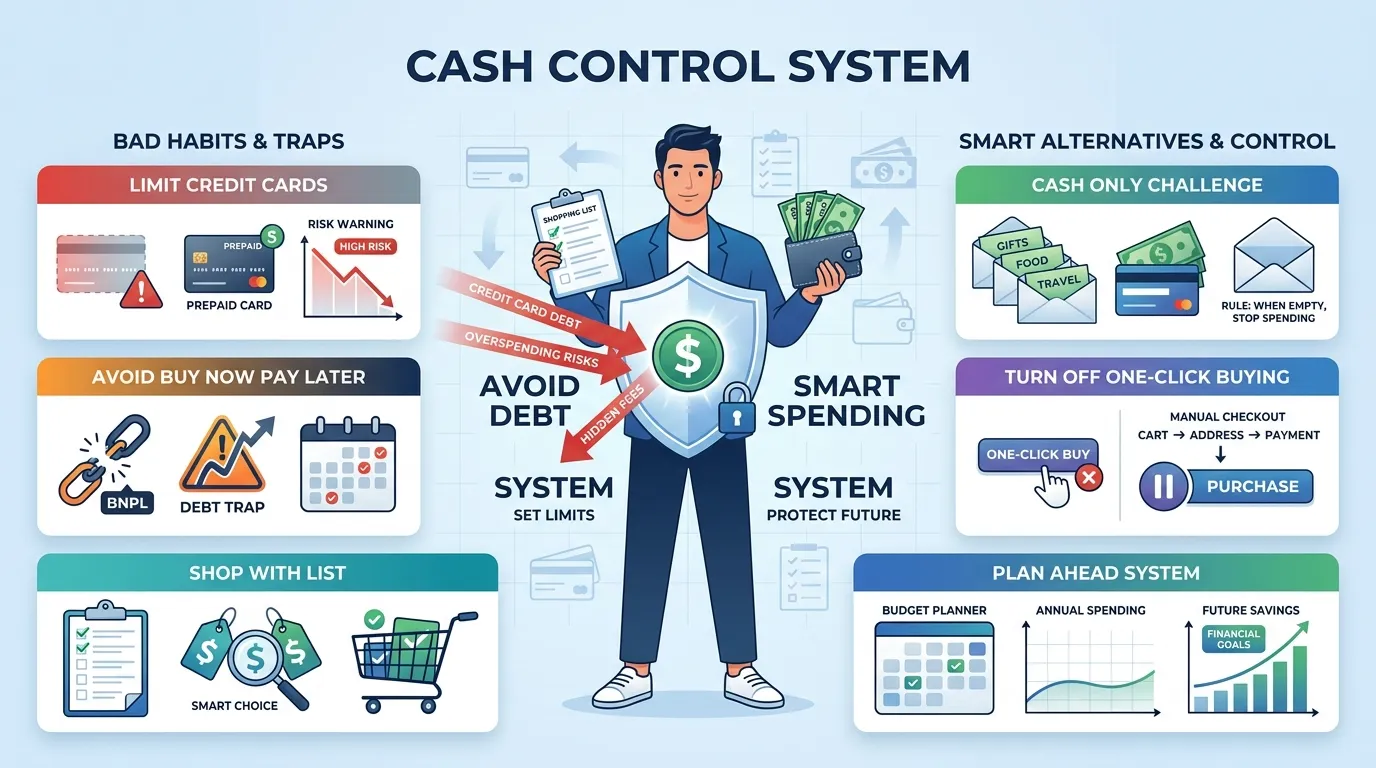
Go cash only instead of cards with a cash challenge in December. Tally up the total amount of money you need for your holiday and put it into separate envelopes of cash, labelled. If the envelope is empty, then you’re done spending in that category for the year.
Use Cash Instead of Cards
Use credit cards only sparingly, so that you can avoid getting into the debt trap of accumulating credit card bills during the holidays. If you have to use a card for online security, then use a prepaid gift card strategy: Where you put a certain amount of money onto a one-time-use card. This way you won’t be able to spend more than your limit.
Limit Credit Card Use
Do not use ‘Buy Now, Pay Later‘ (BNPL) loans or early bird layaway schemes where a purchase is paid for in stages. These financial services disguise the actual price of an object and entice you to purchase things which you aren’t able to afford right now, which causes a debt load on the new year.
Avoid Buy-Now, Pay-Later
Use ecommerce sites (such as Amazon) without one-click buying. You’ll get a helpful friction point when you have to manually enter your shipping address and payment information. This brief delay acts as an impulse buy cooling down period to reconsider buying.
Turn Off One-Click Buying
Always go into stores with a shopping list and compare the price before you go shopping or visit online stores. Only answer questions on your paper/phone. Don’t let anything that’s not listed on the menu fool you, even if it looks good on the display.
Shop with a List and Compare Prices
A good “holiday spending threshold” system is in place and active throughout the year. Make an annual gift budget calendar while you’re on this holiday cycle, noting important dates, sizes of clothing you’ll need, and gift ideas for next year. This proactive organization takes the ‘rush’ out of the next winter season.
Plan Ahead for Next Year
Do an “in-between” check during your holidays, if you are travelling, like going on a summer holiday or visiting family. Match the receipts for lodging, food and entertainment against the method allocation. Resolve any category overages as soon as possible (the next day) by looking for free local activities or cooking meals in the accommodation.
During-the-Trip Check
After the holidays, work out how much you spent during the season and make sure you kept to your goals for your debt-free holiday budget. When you’re done, shut down your trackers and check out what worked and what needs tweaking.
After the Trip
If you are left with some money at the end of the holiday season then concentrate the excess savings on any debt with a high interest rate. You will increase the overall amount of generational wealth you build and bolster your financial safety net long term by putting your extra money toward your debt snowball.
Apply Savings to Debt
If you finished the holiday season under budget, apply your remaining savings directly to any existing high-interest obligations. Redirecting surplus funds to your debt snowball helps build long-term generational wealth and strengthens your general financial safety net.
