


Key Takeaways
- Substantial Capital Savings: Savings from making strategic comparisons between retail outlets range from 15% to 40% in your initial out-of-pocket expenses on a consistent basis.
- Calculate Real Labor Costs: To determine Real Labor Costs, divide the total product price by your net hourly wage and you’ll get a clear idea of how many hours of work the product requires.
- Audit Long-Term Expenses: Consider all other expenses of owning a car, such as accessories, insurance, fuel, maintenance, et al., before deciding on the purchase price.
- Enforce Cooling-Off Buffers: Have a strict 24-48 hour delay for all non-essential large purchases, to avoid impulse buying.
- Compare Financing Structures: Research external credit union loan offers and fork out of inflated, in-house dealer financing alternatives.
Intro
You’ll find this complete guide to necessary comparative strategies to analyse high-ticket items before closing a sale.
Consumers can systematically bypass overpriced retail markups by knowing the real world opportunity costs, using automated digital price tracking, and reviewing costs to purchase and own an item over time.
These deliberate measures will guarantee that you are maximising your purchasing power yet safeguarding your budget at the same time.
Understanding the Importance of Price Comparison
Price comparison sets a benchmark to the market value, so that consumers would not have to pay artificially high prices. Pricing algorithms are sophisticated in a retail environment, where pricing also changes depending on the user’s demographic, regional demand and the scarcity of the stockout pricing.
Consumers don’t have any information to show that they are being offered the discount that it says they are getting.
Benefits of Comparison Shopping
Save Money
Efficient purchases reduce your up-front cash costs and free up cash flow for your family’s budget. By getting a better deal, you’ll have more money to put into accounts with interest or other long-term investments.
Make Informed Decisions
Collecting complete product information puts the power in the hands of the consumer. When purchasing a product from a different brand, you can use the specifications to make sure that you are buying one that has been tested and proven to perform.
Avoid Buyer’s Remorse
Such a purchase path is built on a fact pattern, thereby avoiding the feeling of regret that is common in purchasing. Once you have been informed of all the options, you can make the transaction with complete confidence.
How Much Can You Save?
| Product Name | Retailer A | Retailer B | Total Savings |
|---|---|---|---|
| PowerXL Vortex Air Fryer (7-Quart) | $129.99 | $89.99 | $40.00 (30.7%) |
| ProForm Carbon CX Exercise Bike | $599.00 | $449.00 | $150.00 (25.0%) |
| Skullcandy Indy Evo True Wireless Earbuds | $79.99 | $449.99 | $30.00 (37.5%) |
| Kipling Asseni Mini Printed Tote Bag | $94.00 | $65.80 | $28.20 (30.0%) |
Comparing the prices of goods can save you 15-40% on large purchases. This optimization results in outright savings of $150 to $400 in a purchase of $1000 or more. A comparison of some real-world examples of retail prices for popular consumer goods purchased at well known outlets shows significant differences between the prices:
| Product Name | Retailer A Price | Retailer B Price | Dollar Savings | Percentage Savings |
| PowerXL Vortex Air Fryer (7-Quart) | $129.99 | $89.99 | $40.00 | 30.7% |
| ProForm Carbon CX Exercise Bike | $599.00 | $449.00 | $150.00 | 25.0% |
| Skullcandy Indy Evo True Wireless Earbuds | $79.99 | $49.99 | $30.00 | 37.5% |
| Kipling Asseni Mini Printed Tote Bag (Blue Geo Print) | $94.00 | $65.80 | $28.20 | 30.0% |
Before You Buy: Key Questions to Ask Yourself
⚠️ Key Questions to Ask Yourself Before Checkout
- Want vs. Need Audit: Is this necessary for survival or everyday work transit, or can a lower-cost option serve the same basic function?
- Liquid Cash Liquidity: Do you have the total purchase price available in unallocated capital without touching your emergency or grocery savings?
- Real Labor Cost: Divide total product price by your net hourly wage—is this item truly worth sacrificing multiple working hours or half a week of your life?
- Cost-Per-Use Projections: Will this be a $150-per-use specialty tool built to collect dust, or a high-efficiency $2-per-use daily home appliance?
- Secondary Ownership Fees: Have you calculated long-term maintenance, specific merchant restocking fees (up to 15%), insurance, and energy costs?
If you are considering a high-stakes transaction, there is a checklist that you need to go through with yourself to make sure that you are financially safe.
Is It a Want or a Need?
A need is something that is necessary to exist, or for basic survival, or for everyday activities like a need to work and get to and from work.
A want is something that is not necessary such as High Quality Audio Equipment, designer clothing etc. To do a needs/wants audit, remove all of the luxury items and see if there is a lower-cost option that will still provide the same fundamental function.
Can You Afford It?
Do You Have Cash?
Affordability is the ability to have the total price of the purchasable property in unallocated liquid cash in current accounts. When you have to use your emergency savings, rent savings, or everyday grocery budget to complete the transaction, you don’t have the cash today.
How Will It Impact Your Budget?
If you have a big purchase, then you will need to have your monthly budget balanced. When you have to buy an item, and then carry a bill to the next month, or else you can’t save on the goals you set, then you are running into danger for your finances.
How Many Hours of Work Will It Cost?
Find a real-world labor cost for an item by dividing the price of the item by the net hourly wage. If you work 20 hours for a $500 item, and your net wage after taxes is $25 per hour, then you can afford the item.
If it is not so useful that it is worth half a week of your working life, then it isn’t.If it’s not useful enough to warrant half a working week, it’s not. The focus of this exercise will be the basis for Time Is Money: Teaching Your Kids To Value Their Time.
What Else Could You Do With the Money?
Any expenditure on a consumer capital good involves an opportunity cost. Other uses of that same capital would be for a holiday savings account, a spring break trip, a subscription to an educational tool, or a growth of capital in a high-yield retirement fund.
Planning for a Large Purchase
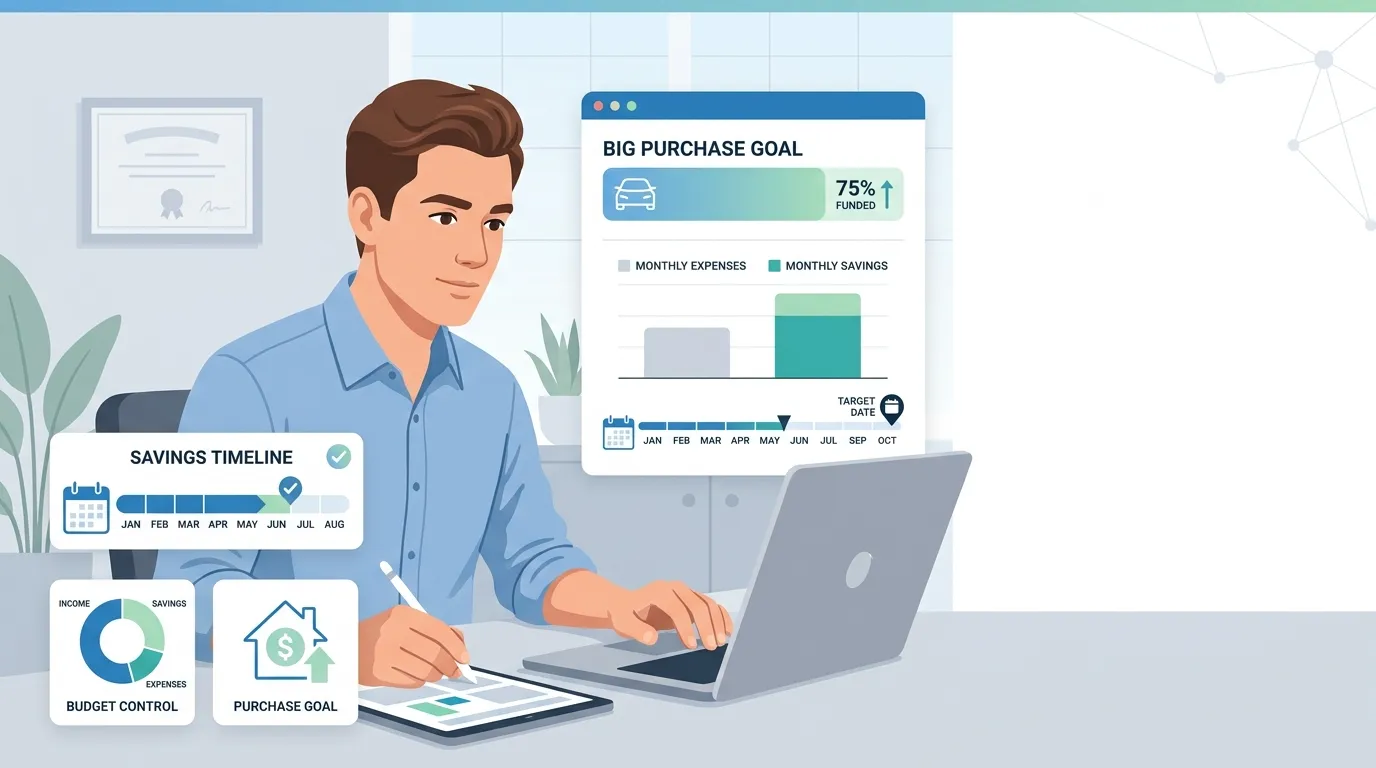
When spending money on a big purchase, it’s important to have a proactive timeline to ensure that you don’t run out of cash or end up with a sudden lifestyle change.
Set a Timeline and Savings Plan
Decide when you’d like to buy and calculate the weekly/monthly amount of the total goal. In order to purchase a $1200 laptop in 6 months, you need to save $200 per month. This is a systematic approach which distributes the financial burden equally.
Create a Separate Savings Account
Separate your funds for your purchases from your everyday checking account. You will not be tempted to use saved up capital for daily living expenses, if you use a separate account. Search online for account interest rates and find that offered by a member owned not for profit financial institution, such as CSE Federal Credit Union.
Reassess Your Budget
Rescored to increase your savings rate. For a while, turn off entertainment, such as premium Spotify subscription or luxury dining apps. When you move the money to your savings goal, you don’t need to worry about your main budget.
Wait 24-48 Hours Before Buying
Adopt a “cooling period” policy of a specific amount of time before making any impulse purchases over a certain money limit. Take a break from the computer and/or retail outlet for 24 to 48 hours. This time lag disrupts the retail urgency cycle.
Consider Your Emotions
Retail therapy is one of the known behaviors that can be a coping mechanism to deal with stress, loneliness or boredom. When you’re in a vulnerable state, regardless of whether you’re emotionally or physically, do not go to online stores or retail malls, because your reasoning for assessing risk is impaired.
Review Upcoming Expenses
Look at your household calendar before depleting your liquid cash reserves and see if there are any bills coming due. Make sure that your major purchase doesn’t overlap with other items that you would want to save for in the year, like back-to-school expenses, insurance renewals, vehicle registration or property tax payments.
Comparison Shopping Strategies
Systematic Market Sourcing Strategies
Comparing prices takes a systematic approach of collecting data on several channels to identify the lowest price.
Know What You Need
Before considering available inventory, determine the exact specifications that you need for your product. If you only use a laptop for word processing and surfing the web, jot down those limitations to avoid being “upsold” on higher graphics cards or further layers of memory that have no bearing on your daily activities.
Look at All Options
Tap into a variety of retail types, direct-to-consumer sites, regional big-box, independent neighborhood retailers and certified online marketplaces. Look for other inventories, such as buy/used or manufacturer-refurbished, that can also offer a full factory warranty for 30% off.
Evaluate Pros and Cons
Use an easy spreadsheet to weigh functional features against economic cost to make a product comparison guide. Compare competing models side by side so that you can compare the same capabilities.
Use Unit Prices
When checking out material, consumables or packaged hardware, check out the unit price, not the total price of the package. Unit pricing shows the financial cost in basic units (e.g. price per ounce, per litre or per item) and helps to highlight whether it is really worth paying more for a larger package.
Check Comparison Websites and Apps
Use automated price comparison sites and aggregators to get a quick overview of the market. Online search platforms such as Google Shopping or browser extensions can search hundreds of online stores at once, which saves you hours of research.
Track Prices Over Time
Use price history platforms to make a long term price history of your target product. These tools create charts of past price history that will determine if the price in question is a true cyclical low or a high price that has been set to take advantage of the convenience of seasonal demand.
Consider Bulk Purchases
If the target is a product that is used regularly by the home over a 12-month period, then work out the cost savings on the per unit of product. Purchase in bulk will significantly reduce the unit cost, as long as it does not negatively affect the short term liquidity requirements.
Embrace Generic Brands
Compare alternative products sold under private labels to products with major brands. In most instances, the same core components or ingredients of the products are used, and produced in the same factories as premium products, so you can gain the same utility and save 20-50% on brand-markup.
Use Coupons and Seasonal Sales
Keep an eye out for auctions in retail stores. Stack up additional savings by adding manufacturer rebates, digital promo codes, and credit card cash-back bonuses to your basic store discounts and cash back.Take advantage of a manufacturer rebate, digital promo codes and credit card cash back while shopping to make your total savings during checkout.
Prioritize Features That Matter
Avoid paying for extra features to a product that you will never use. If a $100 more expensive model is just for the Bluetooth, which doesn’t actually do anything for the appliance, then don’t buy it; go with the cheaper version.
Payment Methods and Financing
The interest that you are charged on your loan, and transaction fees that you incur in buying a major item, make a huge difference in the overall sum of the purchase amount because these compound over time.
Paying With Cash vs. Credit
When you pay cash you are only putting in what you’ve got to lose, no interest builds up and you set the maximum amount of your financial loss.
But if you pay off your credit card balance in full before the bill is due, using a credit card may be beneficial. This will give you consumer protection advantages, additional warranties and credit card rewards without having to pay interest.
Understanding Debt and Interest
| Financing Method | Interest Formula / Billing Dynamics | Bottom-Line Risk |
|---|---|---|
| 💵 Upfront Liquidity (Cash) | You only deploy unallocated liquid cash; zero interest accumulates, capping potential financial loss. | No debt obligations |
| 💳 Card Paid In Full | Transaction cleared entirely before the billing cycle terminates to harvest warranty extensions and cash-back rewards. | Net positive rewards |
| 🚨 Minimum Monthly Debt | Monthly Interest = (APR / 365) x Daily Balance x Days Example: Carrying a balance at 22% APR. |
Wipes out initial retail store discounts |
If you have a credit card debt or take out a personal consumer loan, you start debt and interest cycles. If you buy this appliance on a credit card with an Annual Percentage Rate (APR) of 22% and pay off the loan in the minimum monthly payments, you will end up paying hundreds of dollars more.
Monthly Interest = (APR/365) x Daily Balance x Days in Billing Cycle
This mathematical reality is that a delayed discount can be lost quickly, if it is offset by a few months’ compound interest charges.
Check Your Credit Score
The interest rate you can get from lenders depends on your credit health. Look at your credit files before applying for any financing you might need on your vehicle or home improvement project, such as My Credit Score.
Fixing errors in your report up front will get you the best tier rates, and can save you thousands of dollars in the life of a loan.
Compare Loan Offers
Don’t take the first finance that is offered to you at the time of the purchase. For instance, if you are purchasing a car in Australia, consider car loan deals offered by the dealer or explore specific vehicle funding options offered in the country for electric vehicles.
Many car dealers have built-in financing rates with backend fees that are higher than the financing rates at independent credit unions or directly from a bank.
Consider Currency Exchange for International Purchases
If an item is costly and being bought from overseas vendors, consider how much it will cost to make the cross-border transaction. Always rely on trusted sources to get real-time mid-market exchange rates, such as XE.com or Xe money transfer.
International credit card companies may charge a 3% foreign transaction fee with traditional credit cards, but this can be easily avoided by using optimized international payment platforms or financial providers.
Common Mistakes to Avoid
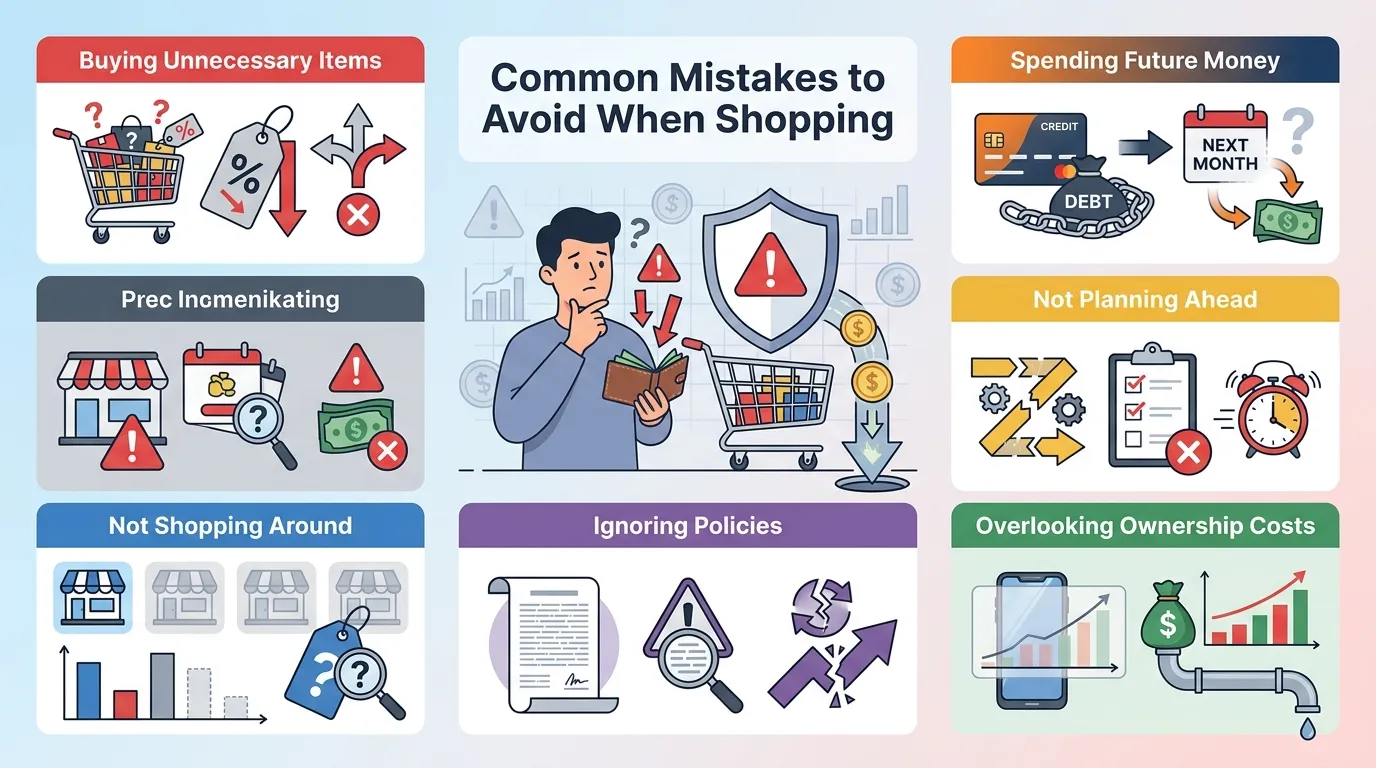
Knowing some of the common shopping mistakes can prevent your household from destroying wealth needlessly.
Buying Unnecessary Items
If you want to buy the item you don’t really need just because it’s offered at a very good discount, then it is actually a loss in terms of finance. If a product on sale is $500 off for $250, that still means that you’re losing $250 in liquid cash from your home budget.
Spending Money You Don’t Have
Using future income is a very risky strategy because if the holiday bonus isn’t actually granted, or if there isn’t a tax refund, then you could be in financial trouble. If that future cash flow doesn’t materialise or is delayed, then you end up with high interest consumer debt.
Not Planning Ahead
If it is a complete failure of an existing product, it is too late to do the research and shopping. You have no time to do any price comparison and can be trapped with whatever price that the vendor in your area asks for.
Not Shopping Around
It is a costly mistake to buy the first item you find that you see because you are in a hurry or familiar with the brand. A price check online, over different websites, usually shows that there will be a big difference in price for the same model numbers after only 15 minutes or so.
Ignoring Store Policies
Not reading the small print on shipping costs, return shipping requirements and warranty limitations can turn a good online deal into a costly disaster if you get the product with a damaged product or it doesn’t fit into your structure.
Overlooking Ownership Costs
Just calculating upfront the amount of money you need to spend to purchase the product, and not taking into account the cost of keeping it running, is robbing you of your wealth over time. For instance, purchasing a low-cost printer that uses costly special-purpose cartridges means that in the long-term, it can cost more than a high-quality, high-efficiency printer.
Repeating Past Mistakes
If you don’t audit past purchasing regrets, you’re still vulnerable to the same marketing mistakes! Record your previous buying mistakes and be conscious of and change them if they return.
Final Tips for Smart Shopping
Implementing smart consumer practices on a regular basis takes a change of perspective about the importance of your money and time.
Expensive Doesn’t Always Mean Better
Price is not a measure of the quality of the structure itself, but rather a result of marketing spend, positioning and manufacturing distribution. Consumers’ testing data has been consistently demonstrating that mid-tier products often perform at the same level or even better in durability tests compared to premium luxury products.
Look at some popular products in the real world from a variety of consumer products, and observe some of the products that are high quality at a variety of price points:
| Category | Premium Brand Option | Price | Alternative Brand Option | Price |
| Footwear | Hunter Boots (Women’s Original Tall) | $185.00 | Merry People Rain Boots | $129.95 |
| Apparel | Men’s Lucky Jeans (121 Slim Straight) | $98.50 | Levi’s Men’s 511 Slim Fit | $69.50 |
| Electronics | Apple AirPods 4 | $129.00 | Skullcandy Indy Evo Wireless | $49.99 |
| Styling Tools | Dyson Airwrap Multi-Styler | $599.99 | Conair Infiniti Pro Smooth & Wave | $99.99 |
Invest in Your Future Self
Each intentional and effective comparison shopping will leave you with more money in your pocket. Aigning for lasting stability over quick obtainments of material possessions builds real monetary wellbeing and quickens your monetary development.
Use Financial Tools and Resources
Increase your consumer capability with the usage of present-day technology within monetary workflow. Stay on top of budgets, automatic savings goals and credit profile checks with dedicated smartphone apps such as the Ascend App. By using these free resources, you’ll have the support you need to keep your household absolutely debt free.
Summary
