


Reaching $500,000 in retirement savings is a major milestone. The pressing question then becomes: how much of that money can be safely spent each year while ensuring that it won’t run out? Financial advisors generally agree that the answer depends on market conditions, life expectancy, and other income sources. However, many point to a conservative annual withdrawal range of $15,000 to $20,000 from a $500,000 portfolio as a sustainable starting point.
This range reflects updated thinking around the long-standing 4% rule, inflation, and the current high-interest rate environment. As William Bengen, the financial planner who developed the 4% rule, has explained, “the 4% rule was never meant to be a fixed guarantee, but a guideline based on historical outcomes.” Understanding how these pieces fit together is essential before withdrawing from retirement savings.
What the 4% Rule Really Means for $500,000
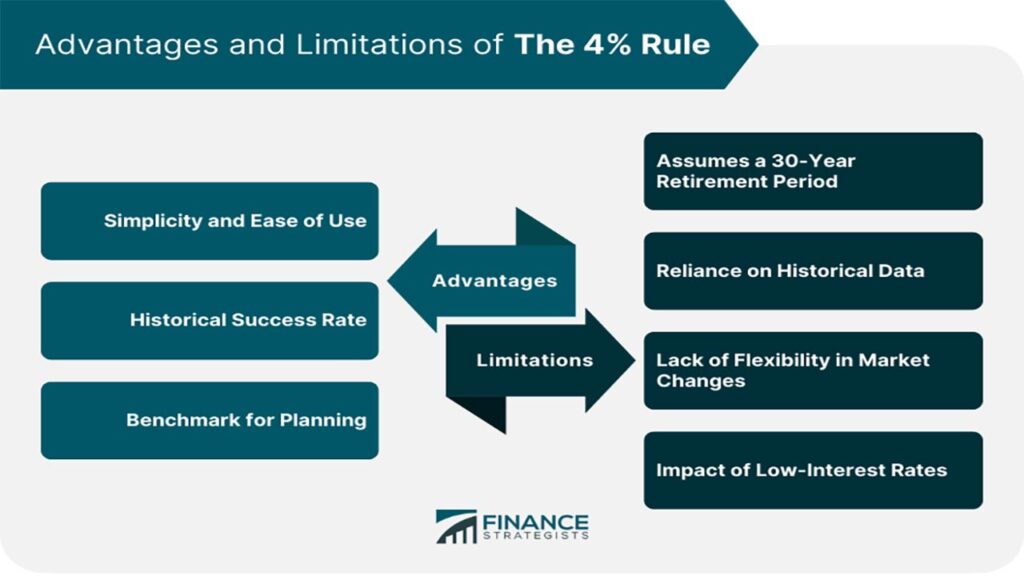
The 4% rule originated from research by William Bengen in the 1990s. After analyzing historical market returns dating back to the 1920s, Bengen concluded that retirees who withdrew 4% of their portfolio in the first year of retirement and adjusted that dollar amount annually for inflation had a high probability of their savings lasting at least 30 years.
For someone with $500,000, a 4% withdrawal equates to $20,000 in the first year of retirement. The $20,000 would then typically increase with inflation in each subsequent year.
The Trinity Study reached similar conclusions, but more recent analysis from Morningstar suggests that lower expected returns may justify a more conservative approach. Morningstar researchers noted that “a starting withdrawal rate closer to 3.3% may be more appropriate in today’s market conditions.”
At 3.5%, a $500,000 portfolio would generate $17,500 in the first year, and at 3%, it would provide $15,000. This is why many advisors today describe a realistic safe spending range for someone with $500,000 in savings as roughly between $15,000 and $20,000 annually, depending on flexibility and risk tolerance.
Why Market Conditions Matter

Withdrawal safety is heavily influenced by what markets do in the early years of retirement. Poor returns at the beginning of retirement can permanently damage a portfolio, a risk known as sequence of returns risk.
Research from Vanguard highlights the importance of flexibility. Vanguard notes that “spending strategies that adjust to market conditions can significantly improve the odds of a portfolio lasting.”
Maintaining a diversified allocation of stocks and bonds also plays a key role in how well the portfolio performs. Historically, balanced portfolios have provided growth to combat inflation while offering some stability during market downturns.
How Social Security Changes the Math

For most retirees, portfolio withdrawals are only one piece of the income puzzle. According to the Social Security Administration, Social Security replaces roughly 40% of pre-retirement income for average earners.
If a retiree receives $2,000 per month from Social Security, that equates to $24,000 annually. That, combined with a 3.5% withdrawal from a $500,000 portfolio, would translate to a total income of about $41,500 per year.
Michael Kitces, CFP has emphasized the importance of combining income sources, noting that “safe withdrawal rates depend heavily on how much guaranteed income you already have.”
Healthcare and Longevity Considerations

Healthcare remains one of the largest variables in retirement spending. Estimates from Fidelity suggest that a 65-year-old couple may need hundreds of thousands of dollars over retirement just to cover medical expenses.
Longer life expectancy further increases the need for conservative planning. Many retirees now need their savings to last 25 to 30 years or more.
This is one reason why advisors increasingly favor withdrawing closer to 3% to 3.5%, as opposed to 4%, of a portfolio. As Kitces has noted, “lower starting withdrawal rates increase the margin for error in uncertain markets.”
So, What Is the Safe Annual Spending Limit?

For a retiree with $500,000 invested in a diversified portfolio, most financial professionals would describe $15,000 to $20,000 per year as a prudent starting withdrawal range. The lower end offers more margin for safety, while the higher end may work for those with flexibility or additional income.
Ultimately, the safest strategy is not a fixed percentage but a plan that adjusts to markets and personal circumstances. Retirees who remain flexible and disciplined tend to preserve their savings more successfully than those who rely on a rigid formula alone.
$500,000 can provide significant retirement income. The key is setting withdrawals at a level the portfolio can realistically sustain and then revisiting that number as conditions change.
