


Bitcoin surged past $71,900 on Thursday, rallying roughly 4% from around $69,100 in fewer than 24 hours after the United States and Iran agreed to a two-week ceasefire. The move began within minutes of the Associated Press confirming the deal, which includes a provision to reopen the Strait of Hormuz to unimpeded oil shipments. According to CoinGecko data, it was Bitcoin’s sharpest single-day advance since late March, when a similar de-escalation headline out of the Middle East triggered a comparable spike.
What the ceasefire includes
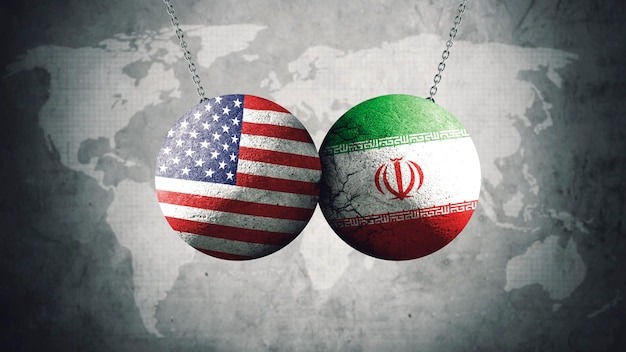
The agreement calls for a two-week halt in hostilities between U.S. and Iranian forces. President Trump pulled back on earlier threats and delayed planned strikes on Iranian energy infrastructure, a decision that immediately preceded Bitcoin’s push higher. The Strait of Hormuz provision carries outsized economic weight: the U.S. Energy Information Administration estimates that roughly 20% of the world’s petroleum liquids transit the narrow waterway each day, making its status a direct input into global commodity and energy pricing.
Iran’s Supreme National Security Council confirmed it accepted the pause but chose language designed to preserve its freedom of action. The council warned that “this pause does not end the war” and that Iran remains ready to respond to any aggression. That framing signals Tehran views the ceasefire as a tactical maneuver, not a step toward a broader settlement.
How markets reacted across asset classes
Bitcoin did not rally alone. According to market data compiled by Bloomberg, S&P 500 futures gained roughly 1% in overnight trading on the ceasefire news, while WTI crude oil dropped more than 3% as the immediate threat to Hormuz transit receded. Gold slipped about 0.5%, a modest retreat consistent with traders rotating out of traditional havens and into risk assets. Taken together, the cross-asset picture points to a broad repricing of geopolitical risk rather than anything specific to crypto fundamentals.
“The ceasefire headline triggered a textbook risk-on rotation,” said Noelle Acheson, a macro analyst and author of the Crypto Is Macro Now newsletter. “Bitcoin is trading as a high-beta equity proxy right now, and the speed of the move tells you algos were front-running the shift before most human traders had even read the headline.”
The broader crypto market followed Bitcoin’s lead. Ether rose roughly 3% over the same window, while a CoinGecko index of the top 20 tokens by market capitalization gained between 2% and 5%, according to data available at the time of publication. Solana and Avalanche posted some of the largest moves among major altcoins, though trading volumes remained below the peaks seen during the late-March rally.
The pattern has now repeated several times this year. In late March, when Trump first announced he would postpone strikes on Iranian energy sites, Bitcoin climbed into the low-$71,000 range within the same trading session. The May ceasefire produced a nearly identical jump, reinforcing the view among market watchers that crypto and traditional risk assets have been trading in tight lockstep with Middle East headline risk throughout 2026.
For context, Bitcoin remains well below its all-time high near $109,000, reached in January 2025. The cryptocurrency has spent much of 2026 range-bound between the mid-$60,000s and low $70,000s, with geopolitical developments acting as the primary catalyst in either direction. Spot Bitcoin ETF flows, which have served as a useful gauge of institutional sentiment since the funds launched in early 2024, had not yet been reported for Thursday’s session at the time of publication.
What remains uncertain
The most pressing question is whether the ceasefire will survive its own two-week window. Sporadic skirmishes were still reported around the time of the announcement, and neither Washington nor Tehran has disclosed a detailed enforcement mechanism. No monitoring body has been named, no process for adjudicating violations has been made public, and no triggers for early termination have been outlined. That leaves both militaries with wide discretion in how they interpret events on the ground.
Tehran’s conditional language compounds the fragility. By explicitly stating that the pause does not end the war, Iran’s security council preserved the option of a rapid return to hostilities. If fighting resumes before the two-week deadline, Bitcoin and other risk assets could give back their gains just as quickly as they accumulated them.
On the market side, there is no publicly available exchange-level data yet tying specific trade volumes, funding rates, or open interest changes to the ceasefire headline. “We saw the price move, but we still do not know who was buying,” noted James Butterfill, head of research at CoinShares. “Until we see ETF flow data and on-chain transfer patterns, it is hard to say whether this was institutional conviction or leveraged retail chasing momentum.” Until that data surfaces, the depth of conviction behind Thursday’s rally is difficult to gauge.
What the rally tells us
The correlation between de-escalation headlines and Bitcoin price spikes is now clear and repeatable across multiple episodes in 2026. What the evidence supports, as of early May 2026, is that Bitcoin is behaving like a high-beta risk asset that reacts quickly to shifts in perceived global danger. It is not acting as a haven that investors flee to during conflict; it is acting as a speculative instrument that rallies when conflict recedes.
Thursday’s surge reflects relief that a wider war has been delayed. It does not reflect evidence that tensions have been resolved. Unless the ceasefire evolves into a durable agreement with transparent enforcement, the gains rest on a foundation that could shift as quickly as the next headline out of the Persian Gulf.
