


Savers who left their cash sitting in traditional bank accounts for years are suddenly seeing something unusual. High-yield savings accounts are offering annual percentage yields (APYs) above 4%, a level that would have seemed unlikely only a few years ago.
With interest rates elevated and competition among online banks intensifying, many Americans are reconsidering where they keep their emergency funds and short-term savings. One question is becoming increasingly common among consumers: if your current bank is still paying less than 1%, is it time to switch?
Why savings account rates are above 4%

The primary reason high-yield savings accounts are paying more than 4% is the broader interest rate environment. When the Federal Reserve (Fed) raises its benchmark federal funds rate, borrowing costs rise across the financial system. Banks, in turn, increase the interest they pay on deposits to remain competitive.
According to data published by the Federal Reserve, benchmark interest rates remain significantly higher than they were during the pre-pandemic era’s ultra-low-rate environment. That shift has filtered into consumer banking products, including savings accounts.
Online banks have been particularly aggressive in raising rates. Without the overhead costs associated with maintaining physical branch networks, these institutions can pass more of their revenue back to depositors through higher annual percentage yields.
As a result, several online banks have consistently offered savings rates above 4%, according to comparisons from financial research platforms such as Bankrate. Meanwhile, many large traditional banks continue to offer rates below 1%.
The difference a higher rate can make

The gap between traditional savings rates and high-yield options can be dramatic. Consider a $10,000 balance.
At a traditional bank offering a 0.10% APY, that balance would generate roughly $10 in interest over a year. At a 4.25% high-yield rate, that same deposit would earn about $425 over the same period. That difference becomes more pronounced over time as interest continues to compound each year.
The difference between traditional savings rates and high-yield options has become increasingly important as households attempt to offset inflation and protect the purchasing power of their cash reserves.
Financial planners frequently recommend keeping emergency savings in accounts that offer both safety and liquidity. High-yield savings accounts provide both characteristics while delivering returns that were largely unavailable in the previous decade.
Are high-yield savings accounts safe?

Despite the higher rates, high-yield savings accounts maintain the same protections as traditional savings products when offered by insured institutions.
Deposits up to $250,000 are protected per depositor, per institution at banks insured by the Federal Deposit Insurance Corporation (FDIC). Credit unions provide similar coverage through the National Credit Union Administration.
This protection means depositors are not taking on market risk like they would with stocks or mutual funds. The primary trade-off is that savings account rates can change over time.
If interest rates fall, banks typically reduce savings yields as well. That is why the highest available APY today may not be as high in future years.
When switching accounts makes sense

For savers earning minimal interest at traditional banks, moving funds to a higher-paying account can be a relatively simple way to increase returns.
Opening a high-yield account usually takes only a few minutes online, and many institutions allow customers to link existing checking accounts to transfer funds electronically.
However, consumers should still review account terms carefully. Some banks advertise promotional rates that may drop after several months. Others may require minimum balances or limit certain types of transfers.
Experts generally recommend focusing on institutions with consistently competitive rates, minimal fees, and strong customer reviews.
Will savings rates stay this high?
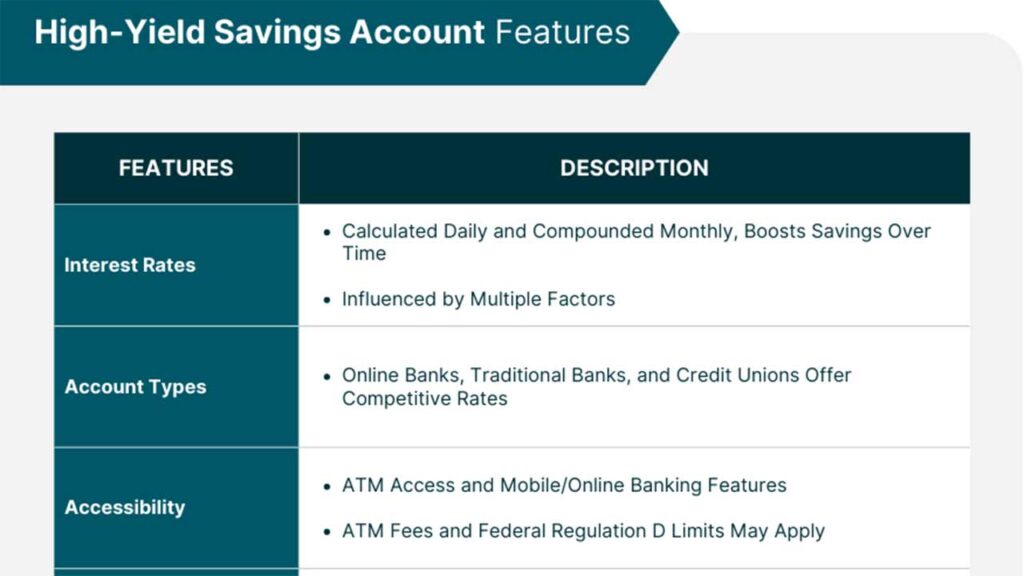
The future of high-yield savings rates will largely depend on the direction of Federal Reserve policy and broader economic conditions.
If inflation continues to cool and the Fed eventually lowers interest rates, then savings yields could gradually decline as well. That pattern has historically occurred during periods of expansionary monetary policy to stimulate economic growth.
Even so, competition among online banks has permanently changed the savings landscape. Over the past decade, digital-first financial institutions have pushed rates higher and made comparison shopping easier for consumers.
For now, savers have a rare opportunity. Cash accounts are offering meaningful returns without requiring exposure to market volatility. For many households, simply moving idle money into a competitive high-yield savings account may be one of the easiest financial upgrades available.
