


President Donald Trump has given Iran until Tuesday at 8 p.m. ET to reopen the Strait of Hormuz, warning that failure to comply will trigger U.S. strikes on the country’s power plants, bridges, and other infrastructure. The threat, first posted in profane terms on Truth Social and then repeated in a Wall Street Journal interview, represents the most direct U.S. military ultimatum against Iran in decades and has thrown global energy markets into uncertainty.
Roughly one-fifth of the world’s petroleum passes through the narrow waterway between Iran and Oman every day, according to the U.S. Energy Information Administration. A sustained closure would choke supply lines to refineries across Asia and Europe and send fuel prices sharply higher at a moment when the global economy is already under strain.
What Trump said — and what he refused to rule out
Trump’s initial deadline was Monday, but he pushed it back by one day without public explanation, according to The Guardian. The extension has fueled speculation about whether the White House is leaving room for backchannel diplomacy or facing internal disagreement over the scope of potential strikes.
The president’s language has grown more expansive with each statement. He initially referenced military and energy targets, then broadened his warning to include power plants and bridges, tying the destruction of civilian-use infrastructure to a hard deadline. In the Wall Street Journal interview, he said Iran would lose “every power plant” if the strait remained closed past Tuesday evening.
At a White House briefing, Trump brushed aside questions about whether civilian targets would be off-limits and offered no legal framework for striking infrastructure that supports hospitals, water treatment facilities, and millions of ordinary Iranians. Under international humanitarian law, attacks on objects indispensable to civilian survival can constitute war crimes, a point legal scholars and human rights organizations have raised repeatedly in the wake of Trump’s remarks.
Iran’s silence and the diplomatic vacuum
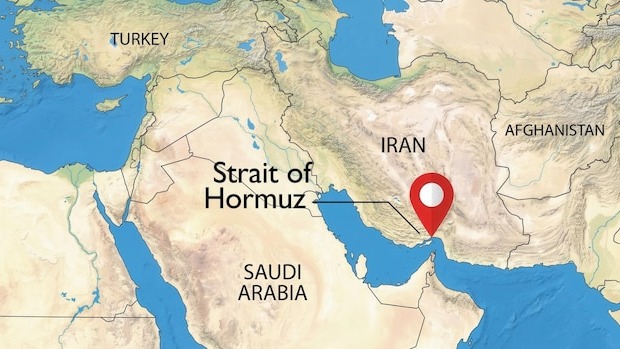
Tehran has not issued a formal public response to the ultimatum. No statement has appeared from Iran’s Foreign Ministry, its military leadership, or its mission to the United Nations addressing either the closure or Trump’s deadline. That silence makes it difficult to gauge whether Iran considers the threat credible, whether intermediaries are working behind the scenes, or whether any compromise — such as partial reopening or third-party monitoring of tanker traffic — is under discussion.
Regional governments that depend on the strait have also been largely quiet in public. Saudi Arabia, the United Arab Emirates, Qatar, and Iraq all export oil through the waterway, and any military confrontation in the channel would put their economies at immediate risk. China and India, the two largest importers of Persian Gulf crude, have significant stakes as well, yet neither has made a detailed public statement as of early April 2026.
Military posture remains unclear
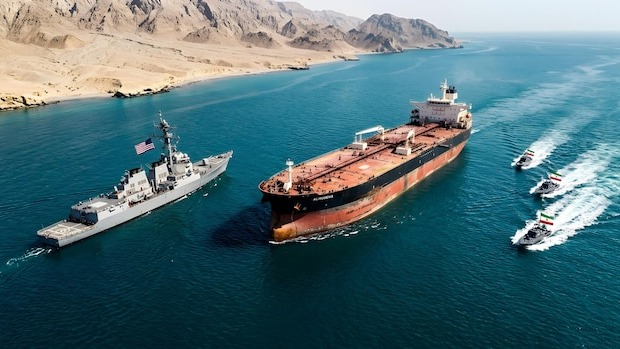
The United States maintains a permanent naval presence in the Gulf, centered on the Fifth Fleet headquarters in Bahrain and regularly reinforced by carrier strike groups. But none of the current reporting includes on-the-record confirmation from the Pentagon or U.S. Central Command that specific strike packages, force movements, or rules of engagement have been tied to Tuesday’s cutoff.
That gap matters. An ultimatum backed by visible military preparation sends a different signal than one that relies on rhetoric alone. Without verifiable details about ship positions, aircraft deployments, or coordination with allied navies, it is impossible to know whether the administration is treating the deadline as an operational trigger or as leverage designed to pressure Tehran back to the table.
Economic stakes are enormous but still unquantified
The Strait of Hormuz handles roughly 17 million barrels of oil per day, making it the single most important chokepoint in global energy trade. A prolonged closure would ripple through crude futures, gasoline prices, and shipping insurance markets within hours.
Yet the reporting so far has not included real-time data on tanker movements, export volumes since the closure began, or verified price swings tied specifically to the standoff. Until that information surfaces, the difference between anticipatory market anxiety and actual supply disruption remains unclear.
What to watch before Tuesday evening
Several signals will indicate whether this standoff is heading toward conflict or negotiation:
- Pentagon statements or visible force movements. Any public acknowledgment of strike preparations would suggest the deadline is operational, not rhetorical.
- Iranian diplomatic signals. A statement from Tehran, even an indirect one routed through Oman or Qatar, could indicate willingness to talk.
- Oil market data. Sharp moves in Brent crude or a spike in shipping insurance premiums for Gulf-bound tankers would reflect how traders are pricing the risk of military action.
- Allied government reactions. Public positions from Gulf states, the European Union, China, or India would clarify how isolated or supported the U.S. posture is.
What is already clear: Trump has staked his credibility on a specific, near-term deadline backed by threats against infrastructure that would directly harm tens of millions of Iranian civilians. Whether that threat is a bluff, a bargaining tactic, or a genuine prelude to strikes, the next 48 hours will carry consequences far beyond the Persian Gulf.
