Market downturns test even the most experienced investors. Over the past three decades, the United States has faced several economic shocks, including the dot-com crash of 2001, the global financial crisis of 2008, and the pandemic-driven recession in 2020. While broad indexes fell sharply during these periods, a small group of companies consistently proved far more resilient than the average stock.
These businesses share several traits: they operate in industries where demand rarely disappears, maintain strong balance sheets, and generate steady cash flow even when the economy slows. Data and research from the S&P Dow Jones Indices and Morningstar show that companies in consumer staples, healthcare, utilities, and certain technology segments have repeatedly held up better than companies in other sectors during recessions.
Several companies stand out for their ability to maintain value and continue growing across multiple economic cycles. These five businesses have demonstrated remarkable resilience through the last 30 years of market turbulence.
Consumer Staples Stability: Procter & Gamble (PG)
Image Credit: Ninthgrid/Pexels
Few companies illustrate recession resilience better than Procter & Gamble. The consumer staples giant sells everyday essentials that households need regardless of economic conditions, including detergent, toothpaste, diapers, and cleaning supplies.
During the 2008 financial crisis, when many stocks lost more than half their value, Procter & Gamble declined far less than the broader market and recovered relatively quickly. Analysts frequently highlight the company’s durable brands, such as Tide, Pampers, and Gillette, as key drivers of that stability.
According to financial data compiled by Morningstar, Procter & Gamble has also paid dividends for decades and has frequently increased its dividend per share. This reinforces its reputation as a defensive stock. Investors often turn to companies like P&G when uncertainty rises because consumer staples demand tends to remain steady even when spending slows elsewhere.
Healthcare Durability: Johnson & Johnson (JNJ)
Image Credit
Healthcare spending rarely drops dramatically during recessions, and Johnson & Johnson has benefited from that reality for decades. The company’s operations span pharmaceuticals, medical devices, and healthcare products, creating multiple revenue streams that help cushion economic shocks.
Throughout the last several market downturns, Johnson & Johnson has maintained strong profitability and continued investing heavily in research and development. That long-term approach has allowed the company to remain a leader in treatments across several therapeutic areas.
Market researchers at S&P Global Market Intelligence note that healthcare stocks historically experience lower volatility during recessions compared with many cyclical sectors. Johnson & Johnson’s long record of dividend growth has also made it a core holding for investors seeking dependable income.
Retail Resilience: Walmart (WMT)
Image Credit: Erik Mclean/Pexels
Economic downturns often push consumers toward lower prices and discount retailers. Walmart has benefited from this pattern across multiple recessions.
During the 2008 recession, for example, Walmart saw increased demand for its products as shoppers searched for ways to stretch household budgets. The company’s scale, supply chain efficiency, and ability to keep prices low helped the company outperform many competitors.
The retailer has also adapted to evolving consumer behavior. Investments in e-commerce, curbside pickup, and digital grocery ordering have allowed Walmart to remain competitive with online platforms while maintaining its reputation for value and low prices. According to company filings and retail industry research, that combination of price leadership and operational scale has helped Walmart remain resilient during economic slowdowns.
Utility Stability: Duke Energy (DUK)
Image Credit: Pixabay/Pexels
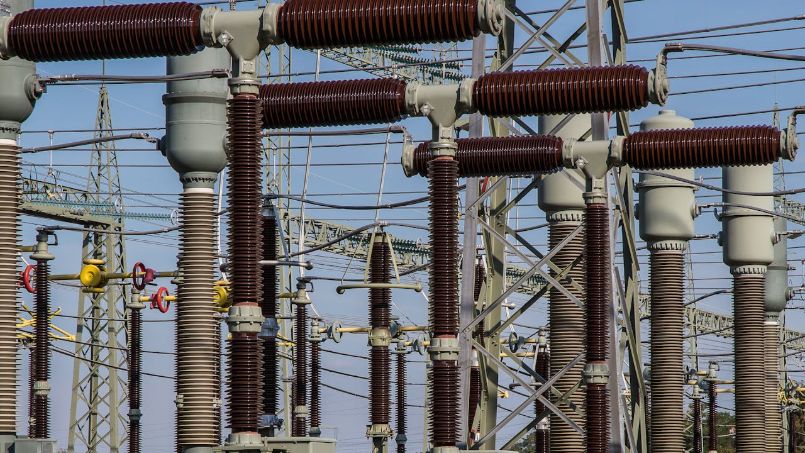
Utilities are often considered among the most defensive investments in the stock market. Electricity, natural gas, and other essential services remain necessary regardless of economic conditions.
Duke Energy is one of the largest regulated utilities in the United States, and its business model relies heavily on long-term infrastructure investments and predictable rate structures approved by regulators. This structure creates reliable revenue streams that are far less sensitive to economic cycles than many other industries.
The company has also expanded investments in renewable energy and grid modernization. According to regulatory filings and energy market research, these projects aim to strengthen long-term infrastructure while maintaining stable returns for shareholders.
Technology Strength: Microsoft (MSFT)
Image Credit: Angel Bena/Pexels
Technology companies were once viewed as highly cyclical investments, but Microsoft has proven to be an exception. Over the past two decades, the company has built a diversified ecosystem spanning enterprise software, cloud computing, and productivity platforms.
Microsoft’s cloud platform Azure and subscription-based services such as Microsoft 365 generate recurring revenue from businesses and institutions worldwide. Even during economic slowdowns, many organizations continue relying on these tools to operate.
Financial data from U.S. Securities and Exchange Commission filings shows Microsoft’s strong balance sheet and consistent profitability have helped it weather market volatility more effectively than many technology peers. That financial strength, combined with continued investment in artificial intelligence and cloud infrastructure, has reinforced its long-term resilience.
No stock is completely immune to economic downturns, and even historically resilient companies can experience temporary declines during severe market stress. However, the past three decades show that businesses with essential products, strong balance sheets, and diversified revenue streams often hold up better than most when recessions arrive.
For investors seeking stability during uncertain periods, companies like Procter & Gamble, Johnson & Johnson, Walmart, Duke Energy, and Microsoft illustrate how certain business models can endure through multiple economic cycles.